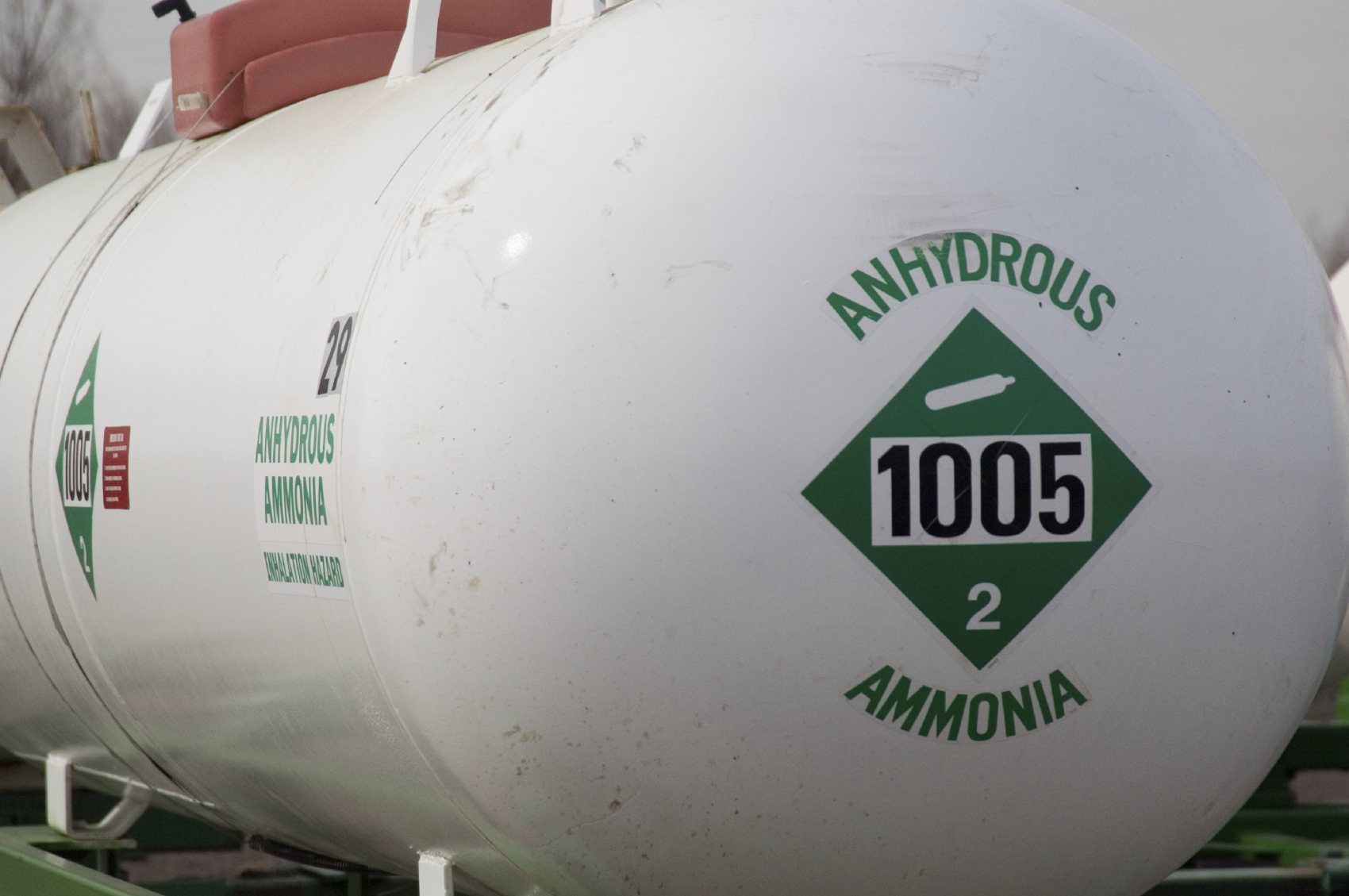

Ammonia is a chemical consisting of one atom of nitrogen and three atoms of hydrogen. It is designated in chemical notation as NH3. Ammonia is extremely soluble in water and is frequently used as a water solution called aqua ammonia. Ammonia chemically combines with water to form ammonium hydroxide. Household ammonia is a diluted water solution containing 5 to 10 percent ammonia. On the other hand, anhydrous ammonia is essentially pure (over 99 percent) ammonia. “Anhydrous” is a Greek word meaning “without water;” therefore, anhydrous ammonia is ammonia without water.
Refrigerant grade anhydrous ammonia is a clear, colorless liquid or gas, free from visible impurities. It is at least 99.95 percent pure ammonia. Water cannot have content above 33 parts per million (ppm) and oil cannot have content above 2 ppm. Preserving the purity of the ammonia is essential to ensure proper functionality of the refrigeration system.